A Finnish way of looking at everyday things
 Nordform editorial · 5 min read
Built in Espoo, Finland.
Everyday objects get interesting when you stop treating them as finished categories and ask what they make possible: what a chair, a glass or a room lets someone do.
This story follows a few Finnish designers and objects, then draws out what they suggest for a new generation of makers. The historical details are linked to museums, foundations and the designers' companies. The lessons for Nordform are our interpretation.
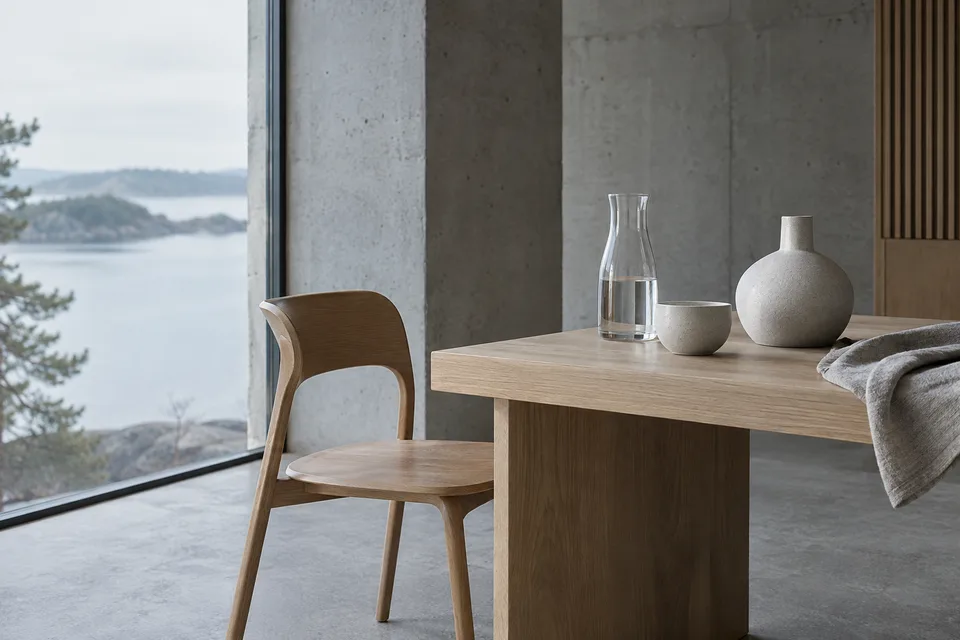
1. Begin with everyday life: Aino Aalto
Aino Aalto's work spanned architecture, interiors, furniture and everyday objects. She was an important figure in Artek's founding in 1935, became its artistic director, and led the company from 1941 until 1949. Her work includes the glassware originally known as Bölgeblick and now associated with her name. Alvar Aalto Foundation: Aino Aalto.
Before asking what a space should look like, ask what someone needs to do in it: where a wet coat goes, which surface becomes cluttered, where daylight falls. A brief gains strength from those observations, even if its author has never drawn a technical plan. And credit the people behind the work: "Aalto" should not flatten Aino's contribution into Alvar's reputation.
2. Let the material teach you: the Paimio chair
The Paimio armchair was designed in connection with the Paimio sanatorium. Its bent wooden structure and plywood seat show a design developed through the possibilities of a material and the circumstances of its use. The Alvar Aalto Foundation records both the chair and its relationship to the sanatorium. Alvar Aalto Foundation: Paimio chair.
A shape is only part of a design. An image does not explain how a joint works, how a surface feels or whether a component can be made consistently, and those questions have to enter the process while the design can still change. For a digital tool, that means keeping dimensions and material assumptions next to the picture.
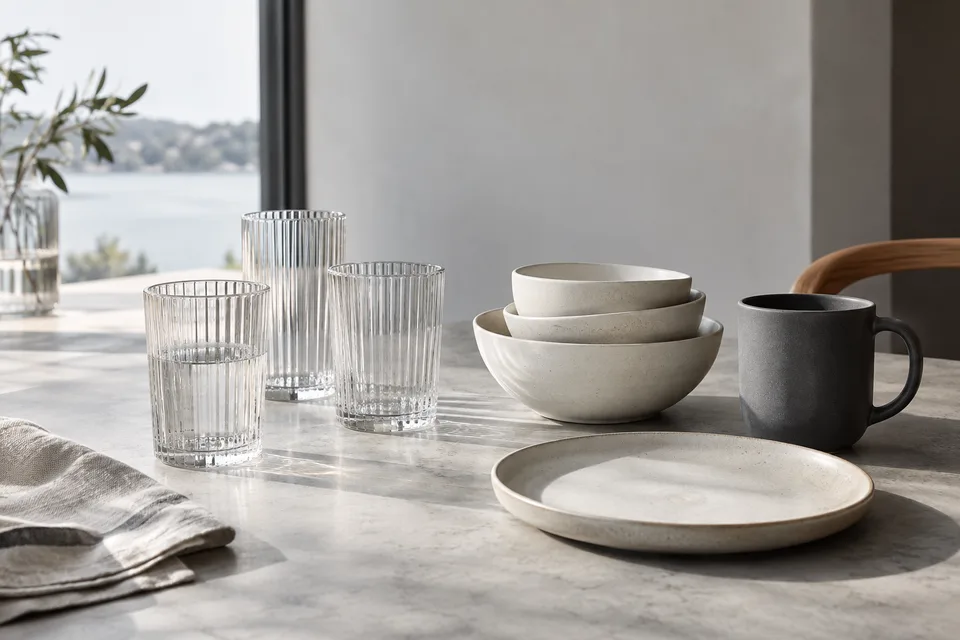
3. Design a family of objects: Kaj Franck
Kaj Franck's Kilta tableware was developed between 1949 and 1952 and later evolved into Teema. Iittala's account describes a collection built around versatile forms and combinations rather than a single elaborate table setting: an example of thinking in relationships, and of how pieces can remain useful in different situations. Iittala: the story of Teema.
When a system's rules are legible, someone can combine parts with confidence instead of starting from nothing. That is part of the reason Nordform begins with configurable systems: a starting point can carry useful knowledge, and the person using it still brings the purpose and judgment. The system should state its limits as clearly as its possibilities.
4. Leave room for a bold idea: Maija Isola
Maija Isola created Unikko in 1964. Marimekko's history places the pattern among a much larger body of work: Isola designed more than 500 patterns for the company, experimenting with scale, rhythm and imagery. Marimekko: how Unikko was born.
Finnish design is sometimes reduced to restraint, and pattern and colour tell another story. Our takeaway is to make experimentation inexpensive: try a different direction, compare it with an earlier one, and return if it does not work. Revision history can protect a good idea while leaving room for an unexpected one.
5. Look closely in Espoo: Rut Bryk and Tapio Wirkkala
EMMA, the Espoo Museum of Modern Art, houses the Tapio Wirkkala Rut Bryk Foundation Collection. Its display brings the work of both artists into view through objects and the collection itself. The foundation was established in 2003, and their children donated the artistic estate. EMMA: the Bryk & Wirkkala collection.
Related objects reveal decisions that a single celebrated example can hide: repetition, small variations, different materials. That suggests a habit for anyone designing something. Keep the earlier version, write down why a detail changed, and look at alternatives together.
What this means for Nordform
"Anyone is a designer" is an invitation to participate, not a claim that all expertise is interchangeable. You know what you want a space to support, a builder knows how a detail behaves on site, and an engineer brings a different kind of evidence. Good tools help those contributions meet without blurring their responsibilities.
So the first step is open: describe the idea in ordinary language, bring the context you have, and start from something useful. The next steps become more precise: inspect, measure, save, ask, revise and involve the right professional.
Keep exploring
The Alvar Aalto Foundation, EMMA and Design Museum collections offer further routes into the people and objects behind this story. These are independent institutions; this article does not imply their endorsement of Nordform.
Explore Nordform ↗