Review one saved version at a time
Clear questions, anchored comments and deliberate revisions make feedback part of the design.
 Nordform editorial · 2 min read
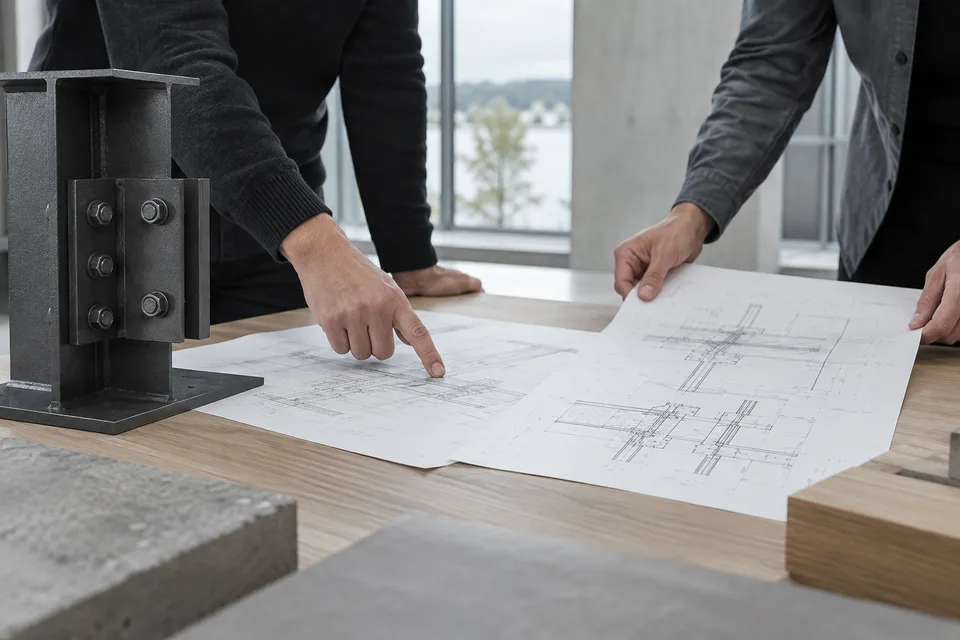
Design feedback is most useful when everyone can see the same thing and knows which version they are discussing.
Give the conversation an anchor
A comment tied to a revision keeps its context when the design changes: a dimension edited, a member moved, a new option replacing the old one. A screenshot pasted into a message does not.
Before inviting feedback, name the decision you need: comparing proportions, checking an assumption, or asking a specialist to review a defined part of the work.
Keep observations and decisions distinct
An observation describes what someone sees. A request proposes a change. A decision records what the designer will do. Keeping those steps visible makes disagreement easier to resolve.
Try a comment like: "This entrance appears narrow for the equipment we discussed. Can we check the required clearance?" It names the concern and the next action.
Ask for a new review after a change
Carry a finding forward deliberately. Record what changed and what remains unresolved, then ask the reviewer to look at the updated version. Agreement on one version has to be asked for again on the changed one.
Nordform keeps comments attached to their source revision. A colleague's feedback is different from an expert's scoped professional decision, and neither gives permission to construct.
End with a useful handoff
A review should leave the next person with the current revision, the relevant evidence, the decisions made and the questions still open.