A file the inspector can read
A plant build is read by ten kinds of inspector at the end. We now keep the regulatory file beside the design from the first revision: clause by clause, with every document filed against its revision, what a change made stale, and a read-only room for one reader.
 Nordform editorial · 4 min read
A plant build ends with a file. The notified body wants the calculations and the material certificates. Tukes wants the registration and the placement plan. The occupational safety authority wants the risk assessment and the instructions. The insurer's risk engineer, the lender's advisor, the owner's own management of change and the customer who receives the product each ask for their own part of the same pile. We count ten kinds of reader on a Finnish industrial project, and most of them turn up near the end.
The file is usually assembled then, by hand, from folders that were never built for it. Certificates are matched to drawings from memory. A change made in week nine is found in week forty, when the inspector asks why the plate thickness on the certificate is not the one on the drawing.
We have started keeping that file beside the design, from the first revision.
What the file does
- It lists what the regulation asks for, clause by clause. Today it reads two instruments: the Pressure Equipment Directive 2014/68/EU with the Finnish pressure equipment acts, and the technical file of the Machinery Regulation (EU) 2023/1230, which applies from January 2027. Each clause is a row with its stage, the document kinds that answer it and the readers who ask for it.
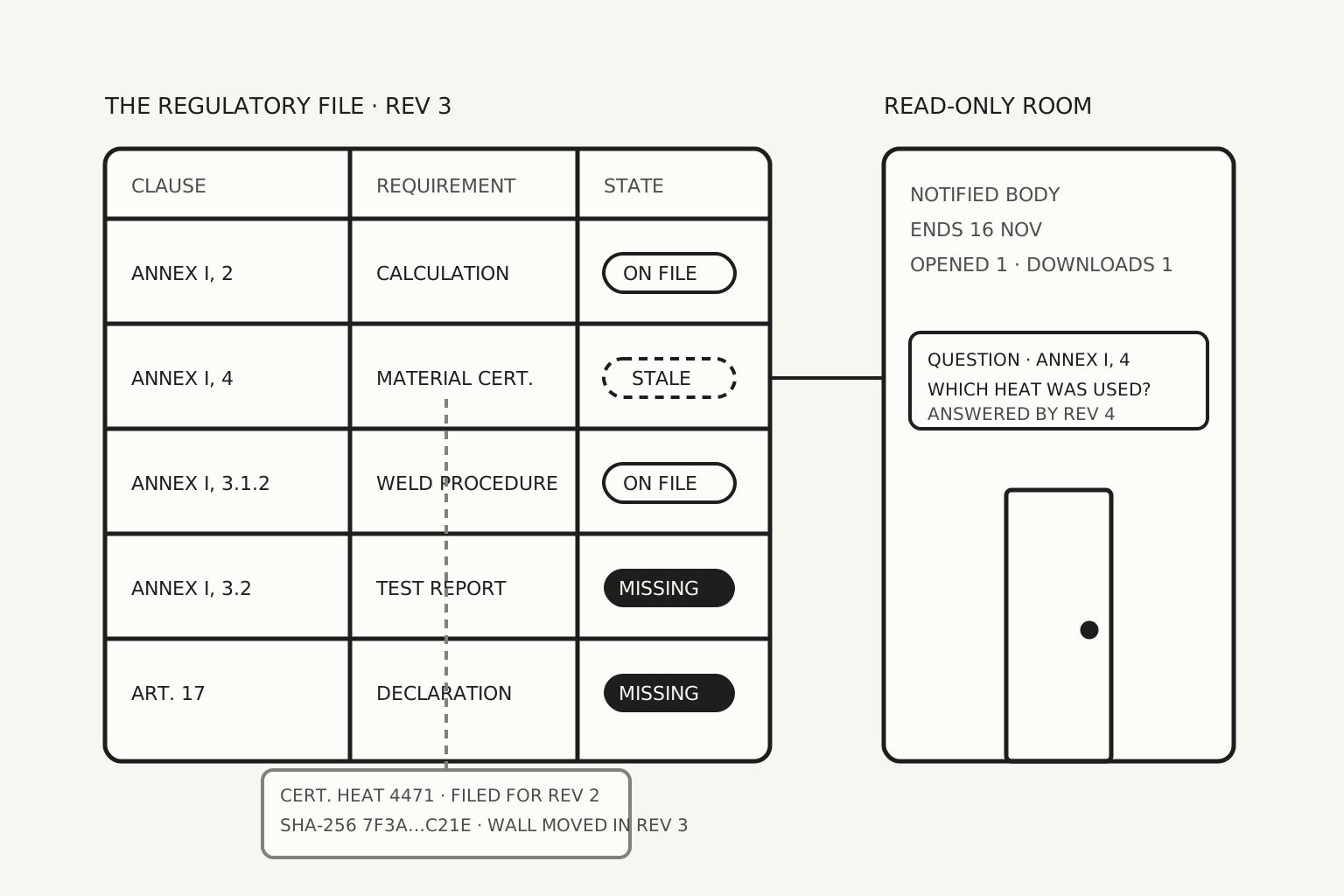
- It files outside documents against a revision. A certificate, a test report, a welding procedure or a drawing is filed with its issuer, its date, its hash and the revision it was produced for. The file keeps the record and the hash; the document itself stays where you keep it.
- It says what a change made stale. When a later revision changes something that reaches a document's kind, the row says so and names the change. A welder's qualification does not go stale because a wall moved.
- It names who places the product on the market. The manufacturer, the owner who assembles machines into a line and takes the manufacturer's duties for it, or the importer. Without that name the technical file index is refused, because the first page has nothing to say.
- It exports in the reader's order. The register comes out as a workbook with one Missing sheet per reader. The technical file index comes out in the instrument's own order, with what is still missing on page one and every document's hash in a manifest.
- It opens a room for one reader. On a project you own, you can let one reader into the file through a read-only link that ends on a date you set. They see only the instruments and document kinds you chose. Every opening and download is recorded. Their questions come back against the clause they concern, and you answer by naming the revision that settled them.
What it is not
The file prepares. It does not approve. A row marked present means a document is on file, not that anyone has accepted it. The manufacturer declares conformity, and the notified body and the authorities judge. Nothing here is a conformity assessment or a declaration.
The machinery pack was transcribed by us from the Official Journal text, and the pressure equipment pack from our own summary of the directive and the Finnish acts. Both are marked advisory on every row until a second reader has read them against the source.
What is missing
The Finnish permit packs are not among the instruments the file reads: the pressure equipment pack carries the Tukes registration and placement rows, and the permit process itself and municipal building control have no pack. A design held in a company workspace carries the file but has no room yet. The room shows records and hashes, so the documents themselves still travel the way they do today.
If you are placing equipment on the market next year and want to see what your file looks like clause by clause before the inspector does, ask us for a reading of it. The product description is on the platform page.